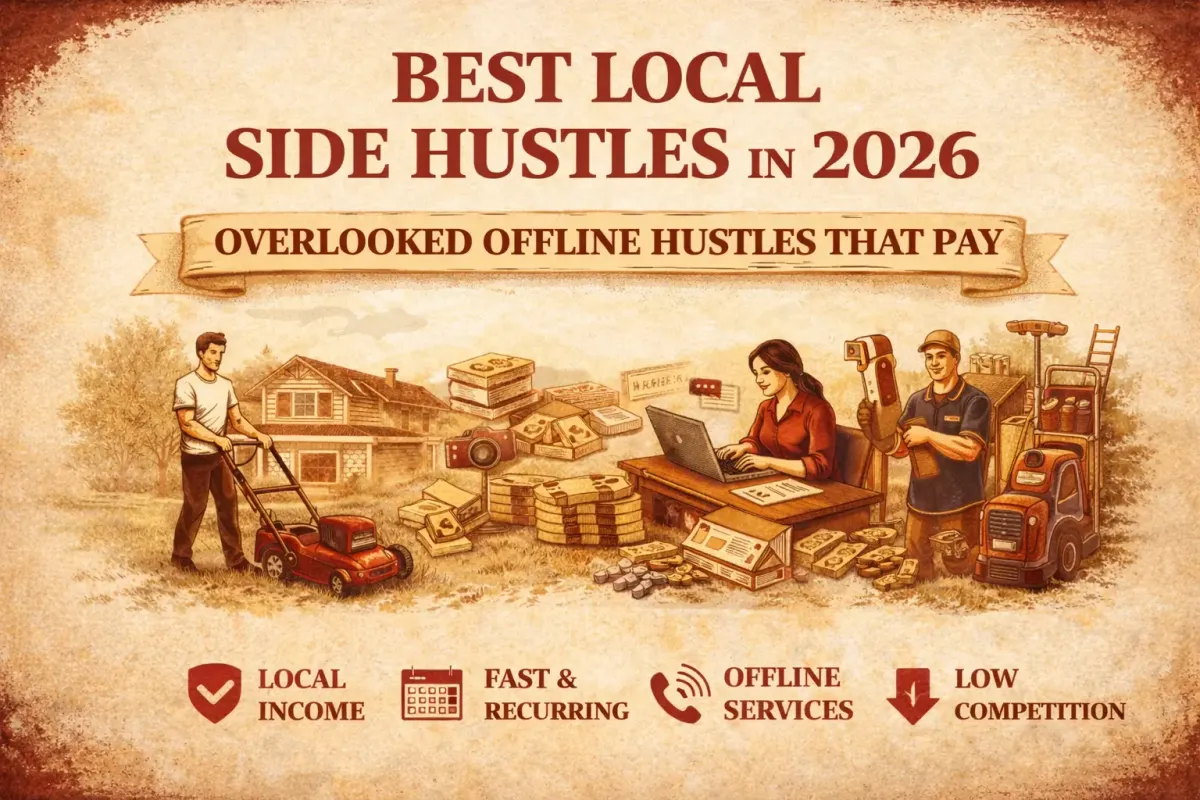
Best Local Side Hustles in 2026 (Overlooked Offline Hustles That Pay)
Local side hustles are still the fastest path to real income in 2026. Discover the best offline hustles, how to price them, find customers nearby, and build recurring local income without relying on algorithms.
Local, offline side hustles rarely get the spotlight. Most “make money” content online pushes digital plays—affiliate marketing, dropshipping, faceless content, freelancing platforms, and “AI everything.” Those can work, but they’re also crowded, slow to build, and often depend on algorithms.
Local side hustles follow a different set of rules. They’re built on proximity, trust, speed, and convenience. People pay for help they can feel—a cleaned home, a mowed lawn, a repaired fence, a walked dog, a detailed car, a set-up party, a tutor who shows up on time. Those needs don’t disappear when a platform changes its policies. And because many local markets are still under-marketed, the person who shows up reliably and runs a simple system can build “real business income” faster than most beginners expect.
This guide breaks down the best local side hustles in 2026, with practical details: what to offer, how to price it, how to find customers, and how to scale without burning out.
What Counts as a “Local Side Hustle” in 2026?
A local side hustle is any income stream where the buyer is within a geographic area—usually a suburb, town, or city—and the product or service is delivered locally.
Local side hustles typically fall into three buckets:
- On-site services: Work is done at the customer’s home, venue, or business (cleaning, lawn care, handyman).
- Mobile services: The provider travels to the customer (car detailing, tech help, pet grooming).
- Local product or resale: Goods are sourced and sold locally (market stalls, flipping, rentals).
What makes local side hustles powerful is how quickly they can create a local income flywheel:
- First job comes from convenience or urgency
- Great experience earns trust
- Trust earns reviews and referrals
- Referrals become repeat customers
- Repeat work builds predictable weekly or monthly income
This is why many local side hustles can out-earn “online-only” plays—even when the online plays look more glamorous.
Why Offline Hustles Can Beat Online Hustles in 2026
Less Competition Where It Matters
Online markets are global, which means a beginner competes with everyone. Local markets are smaller and more human. Many local providers rely on word-of-mouth and don’t consistently market. That creates a “visibility gap” where a new operator can win simply by being easy to find and easy to book.
Higher Trust, Faster Conversions
Local customers buy based on:
- Reliability
- Clear pricing
- Proof (photos, reviews, referrals)
- A professional vibe (even if the business is one person)
A local provider doesn’t need 10,000 followers. They need a few strong reviews, clean photos, and a simple way to request a quote.
Recurring Revenue Is Easier Locally
Online side hustles often require constant content or constant lead generation. Local services can become recurring quickly:
- Weekly lawn routes
- Fortnightly cleaning
- Monthly maintenance
- Ongoing dog walking
- Airbnb turnovers
- Business “retainer” work (fleet cleaning, property checks)
Recurring work is what turns a side hustle into stable income.
“AI + Local” Is the New Edge
In 2026, the advantage is not “doing AI.” It’s using simple systems to run faster and cleaner than competitors:
- Fast quote templates
- Automated follow-ups
- Route planning
- Standard checklists
- Simple scheduling and payment links
The providers who build these systems look “premium” without being expensive to run.
How to Choose the Best Local Side Hustle (A Quick Scoring Framework)
Not every local hustle is right for every person. The smartest move is to choose a hustle that fits time, energy, and risk tolerance.
Use a simple 1–5 score for each category (total / 25+ is usually a strong pick):
- Demand density: Are there enough potential customers within 10–20 minutes?
- Time to first dollar: Can it realistically earn money in 7–14 days?
- Startup cost: Can it start cheap or does it require expensive tools/training?
- Repeatability: Can it naturally become weekly/monthly recurring?
- Risk & liability: What can go wrong and how serious is it?
- Upsell potential: Can average job value be increased easily?
- Scalability: Can it be turned into a route, system, or team?
A beginner-friendly local hustle usually has:
- Low startup costs
- Low technical complexity
- High repeatability
- Low risk
- Clear customer demand
Best Local Side Hustles in 2026 (By Category)
Below are high-performing local side hustles that are consistently in demand. Each includes practical details beginners can use to start fast.
Home & Property Services (High Demand, High Repeat Local Income)
1) House Cleaning (Residential + Move-Out)
Who it’s best for: People who like routines, checklists, and detail work
Startup cost: Low to medium
Earning model: Per job, with packages
Time to first customer: Often 7–14 days in active suburbs
What to offer
- Standard clean (weekly/fortnightly)
- Deep clean (one-off)
- End-of-lease / move-out clean (premium)
- “Quick reset” clean (60–90 minutes)
How to get customers locally
- Post a simple service offer in local community groups (with a booking link)
- Create a one-page “Before/After + Pricing” post and re-share weekly
- Ask early customers for reviews and referrals immediately
- Partner with real estate agents and property managers
- Offer “first clean discount” for recurring bookings only
Simple upsells
- Oven and stovetop clean
- Fridge clean
- Windows (inside)
- Linen change and laundry add-on
- Bathroom detail add-on
One common mistake to avoid
Underpricing deep cleans. Deep cleans take longer, require more supplies, and should be priced as a separate premium package.
2) Lawn Mowing + Garden Maintenance (Route-Based Recurring Income)
Who it’s best for: People who want predictable weekly work
Startup cost: Medium
Earning model: Per job or weekly/fortnightly plan
Time to first customer: Often 7–21 days
What to offer
- Lawn mowing + edging
- Blower tidy
- Basic weeding
- Hedge trimming
- Green waste removal
Why it works in 2026
Busy households want reliability. A “same day each week” route is valuable, and it’s easy to upsell seasonal services.
How to get customers locally
- Target one suburb or cluster of streets (density wins)
- Knock-and-introduce with a simple flyer or card
- Offer “neighbor discount” if two houses on the same street book
- Post before/after photos (lawns photograph extremely well)
- Ask every customer: “Is there anyone else on this street who needs this?”
Simple upsells
- Hedge trim
- Mulch/top-up
- Green waste removal
- Pressure wash pathways
- Seasonal clean-up package
One common mistake to avoid
Driving too far between jobs. Route density matters more than the number of jobs.
3) Pressure Washing (Driveways, Paths, Fences)
Who it’s best for: People who like visible “transformation” work
Startup cost: Medium
Earning model: Per job with minimum call-out
Time to first customer: 7–21 days with strong photos
What to offer
- Driveways and paths
- Patios and outdoor tiles
- Fences
- Exterior walls (carefully, depending on surface)
How to get customers locally
- Build a photo portfolio fast (even do a family member’s driveway)
- Use “before/after” content as the main marketing asset
- Offer bundles: driveway + patio discount
- Promote seasonal services: “post-storm clean” or “pre-sale clean”
Upsells
- Surface sealing (only if competent and compliant)
- Gutter clearing (if safe and offered)
- Outdoor furniture wash
- Add-on for algae/mould treatment (where appropriate)
One common mistake to avoid
Not having clear surface disclaimers or not doing an inspection. Surfaces vary and some materials need different pressure and technique.
4) Gutter Cleaning + Roof Debris Clearing
Who it’s best for: Safety-focused workers comfortable with heights (only if safe/legal)
Startup cost: Low to medium
Earning model: Per job, seasonal packages
Time to first customer: Strong during storm seasons and leaf fall
What to offer
- Gutter clean and flush
- Downpipe check
- “Before rainy season” package
- Roof debris clearing (only if safe and properly equipped)
How to get customers locally
- Seasonal reminder posts: “storm season is here”
- Partner with property managers
- Offer annual reminders (recurring scheduling)
Upsells
- Minor gutter repairs (if qualified)
- Gutter guard consult
- Exterior window wash add-on
One common mistake to avoid
Trying to scale too quickly without safety systems. Risk management matters.
5) Junk Removal / Garage Cleanouts
Who it’s best for: People who don’t mind heavy lifting and sorting
Startup cost: Low to medium (vehicle dependent)
Earning model: Minimum call-out + volume tiers
Time to first customer: Often fast in family suburbs
What to offer
- Garage clearouts
- Yard waste removal
- Pre-move cleanouts
- “One hour load-up” service
How to get customers locally
- Market “fast pickup” as the differentiator
- Offer transparent pricing tiers (small/medium/full load)
- Post “same day” availability during weekends
Upsells
- Donation drop-off
- Resale sorting (split profit model)
- Light demolition (only if appropriate)
One common mistake to avoid
Not factoring dump fees into pricing.
6) Handyman “Small Fixes” + Flat-Pack Assembly
Who it’s best for: Practical, tools-comfortable people
Startup cost: Low to medium
Earning model: Minimum hours or per task
Time to first customer: Often 7–21 days
What to offer
- Shelves, curtain rods, TV mounts (where permitted)
- Door fixes, hinges
- Flat-pack assembly
- Minor patch-and-paint (small jobs)
How to get customers locally
- Offer a “2-hour block” pricing model (simple)
- Create a list of common tasks customers recognize
- Partner with real estate agents and landlords
Upsells
- “Home refresh list” package (5 tasks in one visit)
- Ongoing maintenance plan for older homes
- Emergency fix fee (premium)
One common mistake to avoid
Taking on jobs outside capability or licensing scope. Keeping a narrow scope protects reputation.
7) Airbnb / Short-Stay Turnover Cleaning
Who it’s best for: Checklist people who like consistency
Startup cost: Low to medium
Earning model: Per turnover + add-ons
Time to first customer: Can be fast with partnerships
What to offer
- Turnover clean
- Linen change (optional)
- Restock (toiletries, basics)
- Pre-arrival quality check photos
How to get customers locally
- Reach out to hosts with a professional “turnover checklist”
- Pitch reliability: “same standard every time”
- Offer on-call emergency cleans (premium)
Upsells
- Restock fee + supply management
- Maintenance issue reporting
- Scheduled deep cleans every 4–6 weeks
One common mistake to avoid
Not standardizing the process. Short-stay cleaning succeeds through systems.
Pets & Animal Care (Steady Demand + Premium Pricing Pockets)
8) Dog Walking (Routes + Group Walks)
Who it’s best for: Active people who want flexible daytime work
Startup cost: Low
Earning model: Per walk or weekly plan
Time to first customer: Often fast with local posts
What to offer
- Solo walks (premium)
- Small group walks (higher margin per hour)
- “Before work” and “midday” routes
How to get customers locally
- Build trust: photo updates + consistency
- Partner with local pet stores and groomers
- Offer trial walks for recurring clients only
Upsells
- Pickup/drop-off included in price tiers
- Pet sitting add-on
- Weekend “long walk” premium
One common mistake to avoid
Taking too many dogs too soon. Quality and safety protect long-term income.
9) Pet Sitting + House Sitting
Who it’s best for: Responsible people who are good with routines
Startup cost: Low
Earning model: Per day/night
Time to first customer: Can be quick around holidays
What to offer
- Overnight stays
- Drop-in visits
- Feeding, medication support (if comfortable)
How to get customers locally
- Strong profile and references matter more than flashy marketing
- Use local referrals and “friends of friends”
- Create a simple service agreement and expectations
Upsells
- Basic home tasks: bins, mail, plants
- Extra visit add-ons
- “Holiday premium” pricing
One common mistake to avoid
Not being clear on boundaries (number of visits, timing, included tasks).
10) Poop-Scooping Service (Subscription Model)
Who it’s best for: People who want a simple route-based business
Startup cost: Low
Earning model: Weekly or fortnightly subscription
Time to first customer: Often 7–21 days
What to offer
- Weekly yard clean
- Fortnightly plan
- One-off “yard reset”
Why it works
It’s not glamorous, which is exactly why it’s overlooked. It’s also recurring and route-friendly.
Upsells
- Deodorizing treatments (where appropriate)
- Pet waste bin service
- Add-on for multiple dogs
One common mistake to avoid
Not having clear disposal handling and expectations.
Local “Errands, Help, and Convenience” (Underrated and Fast to Sell)
11) Local Moving Help / Lifting Assistance
Who it’s best for: Physically capable people
Startup cost: Low
Earning model: Hourly + minimum call-out
Time to first customer: Often fast
What to offer
- Two-hour minimum
- Two-person team option (premium)
- Loading/unloading only (lower risk than full moving)
How to get customers
- Weekend availability sells
- Clear “what’s included” reduces friction
- Target families and renters
Upsells
- Packing help
- Furniture disassembly/reassembly
- Dump run add-on
One common mistake to avoid
Not clarifying scope and fragile item responsibility.
12) Senior Tech Help (Phones, TV, Wi-Fi Basics)
Who it’s best for: Patient communicators
Startup cost: Low
Earning model: Hourly or package
Time to first customer: Often through referrals
What to offer
- 60-minute home tech reset
- “New phone setup” package
- TV + streaming setup
How to get customers
- Trust channels: family referrals, local groups, community centers
- Keep it simple: “No judgment, calm support”
Upsells
- Monthly check-in support
- Printed cheat sheets
- Smart home basics setup
One common mistake to avoid
Overcomplicating the offer. Seniors buy clarity and comfort.
13) Personal Shopping / Errands for Busy Households
Who it’s best for: Organized people
Startup cost: Low
Earning model: Per hour + delivery fee
Time to first customer: Can be quick in busy suburbs
What to offer
- Grocery runs
- Pharmacy pickups
- Returns and exchanges
- School-related errands
Upsells
- Weekly “household admin” slot
- Express/rush fee
- Subscription concierge plan
One common mistake to avoid
Not setting boundaries. Errand services need clear time blocks.
Kids, Education & Coaching (High Trust, High Hourly)
14) Local Tutoring (One Subject, One Outcome)
Who it’s best for: Strong communicators with subject confidence
Startup cost: Low
Earning model: Hourly, packages, or term blocks
Time to first customer: Often 2–4 weeks if marketed well
What to offer
- One subject (math, English, science) and a clear outcome
- Exam prep intensives
- Small group sessions (higher hourly)
How to get customers
- Parent networks and community groups
- Partner with schools and local learning centers
- Offer “first session assessment” as a paid session (not free)
Upsells
- Homework support package
- Weekly recurring bookings
- Holiday workshops
One common mistake to avoid
Trying to tutor everything. Specialists command higher rates and get referred faster.
15) Youth Sports Coaching / Skills Sessions
Who it’s best for: Coaches and ex-players
Startup cost: Low
Earning model: Per session or 4-week blocks
Time to first customer: Often seasonal
What to offer
- Small group skills sessions
- One-on-one coaching (premium)
- “Holiday camp” style blocks
How to get customers
- Partner with clubs and schools
- Sell outcomes (confidence, fitness, skills)
- Build simple progression plans
Upsells
- Video feedback
- Team sessions
- Parent “at-home drills” plan
One common mistake to avoid
Undercharging. Coaching includes planning and travel time.
16) Music Lessons (In-Home or Local Studio)
Who it’s best for: Musicians who like consistent weekly work
Startup cost: Low to medium
Earning model: Weekly recurring
Time to first customer: 2–6 weeks depending on reputation
What to offer
- Beginner-friendly pathways
- Weekly lesson slots
- Simple practice routines
Upsells
- Group lessons for siblings
- Performance coaching
- Term packages paid upfront
One common mistake to avoid
No clear cancellation policy. Recurring lessons need boundaries.
Auto & Mobile Services (Premium Pricing When Positioned Right)
17) Mobile Car Detailing
Who it’s best for: People who like “transformation” work and upsells
Startup cost: Medium
Earning model: Package pricing
Time to first customer: 7–21 days with photos
What to offer
- Basic exterior wash
- Full interior detail (premium)
- Maintenance detail subscription
How to get customers
- Before/after content is the main marketing engine
- Offer “workplace detailing days” at local businesses
- Sell convenience: “done while you’re at work”
Upsells
- Ceramic spray/sealant add-ons
- Pet hair removal premium
- Odor removal
- Headlight restoration
One common mistake to avoid
Pricing purely hourly. Packages improve perceived value and simplify sales.
18) Fleet Cleaning for Local Businesses (Recurring B2B)
Who it’s best for: People who want stability over one-off customers
Startup cost: Medium
Earning model: Weekly/fortnightly contract
Time to first customer: Often 2–8 weeks
What to offer
- Regular wash schedule
- Simple interior wipe-down
- Consistent “brand look” for vehicles
How to get customers
- Approach small trades businesses (plumbers, electricians, HVAC)
- Pitch: “Keeps the fleet looking professional without staff time”
- Offer a trial week at a clear paid price
Upsells
- Quarterly deep interior cleans
- Sticker removal
- Emergency cleans before quoting jobs
One common mistake to avoid
Not locking in a schedule. B2B works best with set days and predictable service.
Events & Local Creative Gigs (High Weekend Income)
19) Event Photography (Small Events + Business Content Days)
Who it’s best for: Creatives with basic equipment and editing skills
Startup cost: Medium
Earning model: Package pricing by time and deliverables
Time to first customer: 2–8 weeks
What to offer
- Birthday and family events (60–120 minutes)
- Engagement sessions
- Small business “content days” (high demand in 2026)
How to get customers
- Portfolio first: do a few low-cost sessions to build proof
- Partner with venues and event planners
- Offer clear deliverables (number of edited photos, turnaround time)
Upsells
- Rush delivery
- Extra edited images
- Short highlight video add-on (if capable)
- Printed photo products
One common mistake to avoid
No contract or unclear deliverables. Creative work needs scope clarity.
20) Balloon Styling / Party Setup
Who it’s best for: People who like aesthetics and quick builds
Startup cost: Low to medium
Earning model: Per setup + delivery
Time to first customer: Often fast around birthdays and seasons
What to offer
- Balloon garlands
- Backdrop setups
- Kids party bundles
- Small corporate event décor
How to get customers
- Photos matter more than words
- Partner with cake makers and venues
- Promote seasonal moments: graduations, holidays, school formals
Upsells
- Delivery and teardown
- Themed add-ons (table styling, signage)
- Extra size upgrades
One common mistake to avoid
Underestimating time. Setup and travel must be priced in.
21) Local Food Prep / Baking to Order (Where Compliant)
Who it’s best for: Skilled home cooks with a signature product
Startup cost: Low to medium
Earning model: Preorders and weekly drops
Time to first customer: Varies; faster with community trust
What to offer
- A single hero product (cookies, sourdough, meal prep bowls)
- Preorder-based schedule (reduces waste)
- Pickup/drop options
How to get customers
- Sell small weekly batches
- Build a “waitlist” vibe ethically (limited slots)
- Partner with local cafés for pop-ups
Upsells
- Subscription boxes
- Event catering trays
- Seasonal menu specials
One common mistake to avoid
Trying to offer everything. One signature product scales best.
Resale, Markets & Local Product Flips (Profit Per Item, Weekend-Friendly)
22) Marketplace Flipping (Furniture, Tools, Baby Gear)
Who it’s best for: People who like deal hunting and negotiation
Startup cost: Low
Earning model: Profit per item
Time to first customer: Can be immediate
How it works
- Source undervalued items locally
- Clean and photograph professionally
- List with clear measurements and pickup options
- Offer delivery for a fee
Best categories
- Solid wood furniture
- Power tools
- Baby items (prams, cots) where safe/appropriate
- Outdoor items (BBQs, bikes)
Upsells
- Delivery fee
- Assembly service (if capable)
- Bundle deals (chairs + table)
One common mistake to avoid
Buying without checking resale demand. The best flippers start by selling first, then sourcing.
23) Weekend Market Stall (Simple Product Line)
Who it’s best for: Makers and curators
Startup cost: Medium
Earning model: Per sale + repeat customers
Time to first customer: Fast once approved for a market
How to win
- Sell one thing extremely well (not 15 things)
- Create bundle pricing
- Collect contacts for repeat ordering
Upsells
- Custom orders
- Gift packaging
- Subscription orders for favorites
One common mistake to avoid
No margin. Markets have fees and time costs that must be priced in.
24) Local Rentals (Party Items, Tools, Baby Gear)
Who it’s best for: People who like asset-based income
Startup cost: Medium (inventory)
Earning model: Rental fee + deposit
Time to first customer: 2–6 weeks typically
What to rent
- Party items: tables, chairs, arches, backdrops
- Tools: specialty tools people rarely buy
- Baby items: short-term needs (where safe and appropriate)
Upsells
- Delivery and pickup
- Setup service
- Cleaning fee
One common mistake to avoid
Not managing deposits and damage terms clearly.
How to Find Customers for Local Side Hustles (Without a Big Audience)
Local marketing wins by doing a few simple things consistently.
Build a “Local Proof Stack”
A beginner can look professional with:
- A simple service page (even one page is enough)
- Clear packages and starting prices
- Before/after photos
- 5–10 reviews as fast as possible
- A clear booking or quote process
Use Trust Channels
Local customers often buy through:
- Community Facebook groups
- School and sports networks
- Local noticeboards and community pages
- Referrals from existing customers
- Partnerships with related businesses
Partnerships That Feed Leads
One strong partner can outperform ads. Examples:
- Real estate agents → cleaning, lawns, handyman
- Property managers → maintenance services
- Airbnb hosts → turnovers
- Pet stores/vets → pet services
- Gyms/clubs → coaching
- Venues → events services
Offline Marketing That Still Works
- Targeted flyers in one suburb (not city-wide spam)
- Business cards at complementary businesses
- A simple “neighbor intro” offer (limited, honest, and localized)
The key: local marketing compounds when it stays concentrated. A hustle grows faster serving one suburb well than serving ten suburbs poorly.
Pricing Local Side Hustles (So It’s Actually Worth It)
Many beginners underprice because they think they’re selling “time.” In reality, they’re selling:
- Convenience
- Reliability
- Skill and tools
- Risk taken on
- Results delivered
A Simple Pricing Model That Works
- Minimum call-out fee (protects time and travel)
- Packages (good / better / best)
- Add-on menu (raises average job value)
- Premium fees (rush, after-hours, weekends)
A Practical “Effective Hourly” Check
Pricing should reflect more than the time on-site. Include:
- Travel time
- Quoting and messaging
- Supplies and wear-and-tear
- Admin and follow-ups
- Taxes and fees
A side hustle that earns “$50/hour” on paper can be $25/hour after reality. The goal is to price so the work stays worth repeating.
Operations & Systems (What Turns a Side Hustle Into Reliable Local Income)
The biggest difference between a random gig and a real side hustle is a consistent workflow.
A Simple Weekly Workflow
- Lead asks for info
- Quote is sent fast (same day)
- Booking confirmation and time window
- Reminder message (day before)
- Job completed
- Payment collected
- Review request sent
- Referral ask and next booking offered
Templates That Make Everything Easier
- Quote templates (by service type)
- Checklists for each job
- Message scripts for follow-ups
- Cancellation policy (clear but fair)
- Photo standards (before/after consistency)
Getting Paid Like a Professional
- Use deposits for bigger jobs
- Provide invoices/receipts
- Reduce “cash-only” reliance
- Make it easy: bank transfer, card options, payment links (where possible)
Convenience sells. The easier payment is, the faster customers say yes.
Legal, Insurance, and Tax Basics (High-Level)
Local side hustles vary by region. Some services may require licensing, certifications, or insurance depending on jurisdiction and risk.
At a high level, smart beginners:
- Check local regulations for their service type
- Use clear written scope (what is included and excluded)
- Consider basic liability coverage where relevant
- Keep simple records of income and expenses
- Set aside a portion for taxes
This is not about being perfect on day one. It’s about reducing risk while building legitimate local income.
How to Scale a Local Side Hustle in 2026 (Without Burning Out)
Scaling doesn’t always mean hiring staff. Many local hustles scale by system first.
Scale Through Routes and Recurring Work
Recurring work is the easiest scale:
- Lawn routes
- Cleaning schedules
- Dog walking routes
- Monthly maintenance
When the calendar is filled with repeat bookings, income becomes predictable.
Scale Through Specialization
Generalists compete on price. Specialists compete on outcomes.
Examples:
- “End-of-lease cleaning specialist”
- “Pet hair removal detailer”
- “Airbnb turnover + restock service”
- “Math tutoring for Year X”
Specialization simplifies marketing and increases price tolerance.
Scale Through Subcontractors (Simple Handoff)
Once processes are documented:
- Train a helper with checklists
- Standardize quality expectations
- Keep customer communication consistent
- Maintain the same “brand experience”
The aim is to create a business that runs on systems, not constant personal effort.
FAQs: Best Local Side Hustles in 2026
What is the highest paid local side hustle?
High-paid local hustles typically combine premium pricing with strong demand and visible results. Examples include move-out cleaning, specialized car detailing, certain property services, and event-related work. The highest paid option depends on local market density, ability to upsell, and how consistently the provider can book recurring work.
How can someone make $100 a day with local income?
Many local side hustles can reach $100/day quickly by using minimum call-out fees and booking 1–2 small jobs. Examples include a single two-hour handyman block, one detail package, a small clean, or two dog-walking slots. The fastest path is usually a simple offer in one suburb plus consistent follow-ups.
What is the easiest local side hustle to start?
The easiest local side hustles are usually low-cost and simple to deliver: dog walking, poop-scooping, basic yard work, errands, and basic cleaning. The “easiest” choice is the one that fits the person’s schedule and comfort level, because consistency matters more than complexity.
Do people need to pay taxes on side hustle income?
In most jurisdictions, side hustle income is still income and may be taxable. A practical approach is to track earnings and expenses from day one and set aside a portion of profits so taxes do not become a surprise. The best choice is to check local tax rules and consider basic bookkeeping early.
What expenses can be deducted for a local side hustle?
Common deductible expenses often include tools, supplies, protective equipment, fuel or mileage (where applicable), marketing materials, and certain business-related fees. The key is keeping records and receipts so claims are clear and defensible.
How much should be set aside for taxes from side hustle profit?
A common practical habit is to set aside a portion of profits in a separate account. The exact percentage depends on location, income level, and business structure. Beginners often start with a conservative set-aside and adjust once they understand their tax obligations.
Is a side hustle worth it after taxes?
A well-priced local side hustle can still be worth it because it creates extra cash flow, skills, and future business options. Taxes reduce profit, but the bigger threat is underpricing and inconsistent bookings. When pricing includes travel, admin, and costs, the hustle can remain worthwhile.
How do beginners find customers locally?
Beginners typically get customers fastest by concentrating on one area and using trust channels: community groups, referrals, partnerships, and clear service offers. Before/after photos, clear pricing, fast replies, and a simple booking process often outperform complicated marketing.
Do side hustlers need a business plan?
A formal business plan is optional for most beginners. A simple plan is enough: one offer, one price structure, one marketing channel, and one weekly schedule. The key is running a repeatable process and refining it based on real customer responses.
Do you need a license to start a pressure washing business?
This depends on local regulations and the type of work being performed. Beginners should check what is required in their area, especially if working on commercial properties or using chemicals. When in doubt, staying within low-risk residential services and being transparent about scope is a practical start.
Conclusion: Local is the Shortcut in 2026
The most overlooked opportunity in 2026 is not another online trend. It’s the local market that already exists—neighbors who want convenience, reliability, and results.
Local side hustles can be surprisingly lucrative because:
- Competition is often lower
- Trust compounds through referrals
- Recurring work is easier to build
- Simple systems create a “professional” advantage
The fastest path for most beginners is simple:
- Pick one local hustle with strong demand
- Define one clear offer and package
- Post locally and message leads consistently
- Book the first job and deliver an excellent experience
- Ask for a review and a referral immediately
- Repeat weekly until recurring income forms
Local income is built the old-fashioned way—show up, do great work, and make it easy for people to hire again. In 2026, that approach is still one of the most reliable ways to earn extra money and build a real business foundation.