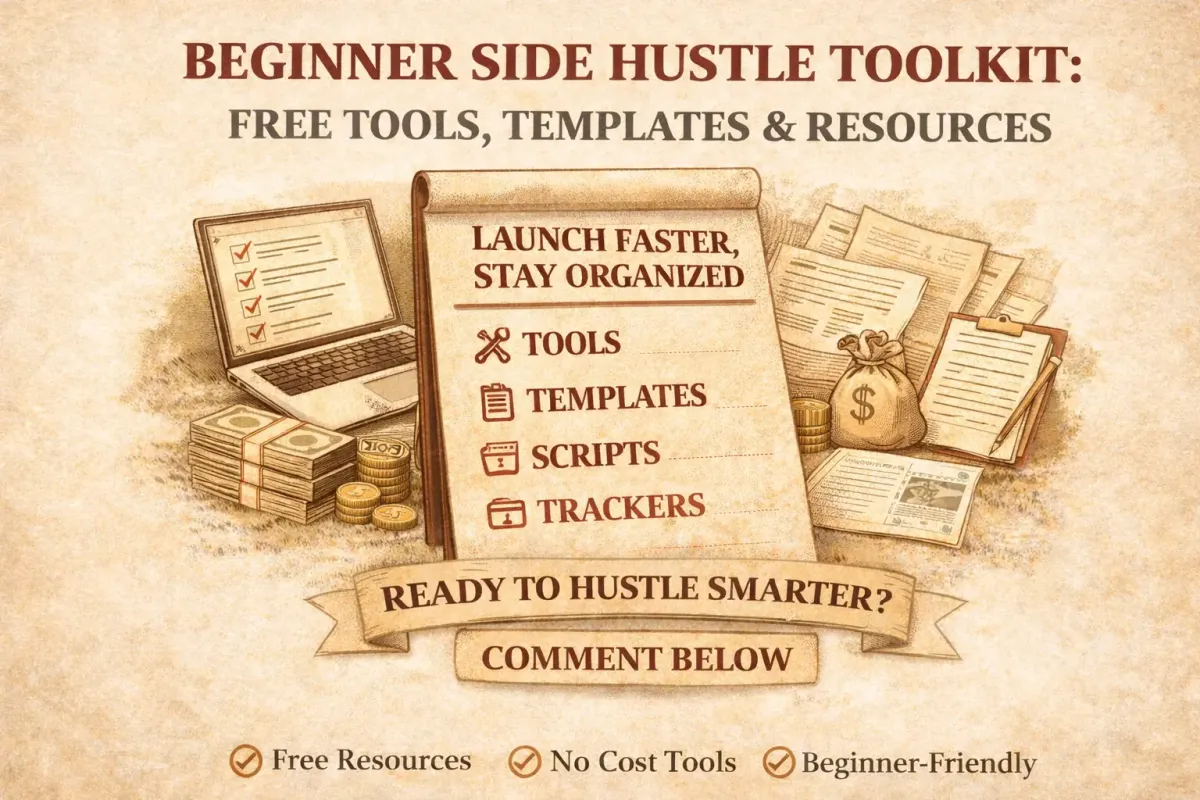
Beginner Side Hustle Toolkit: Free Tools, Templates & Resources
A beginner-friendly side hustle toolkit featuring free tools, templates, and resources for planning, outreach, invoicing, and tracking. Learn how to stay organized, launch faster, and build simple systems that support real progress—without spending money upfront.
Starting a side hustle is rarely about having a “perfect idea.” More often, success comes down to having simple systems, the right basic tools, and a way to stay organized long enough to earn the first dollars. Beginners tend to overcomplicate this stage—either by buying too many tools too early or by avoiding systems altogether.
This beginner side hustle toolkit focuses on free or low-cost tools, templates, and resources that help new hustlers launch faster, stay consistent, and avoid common mistakes. It is designed for people starting from zero—online or offline—without a big budget or technical background.
What This Side Hustle Toolkit Is (and What It Isn’t)
This toolkit is a practical starting point, not a software stack or a list of expensive subscriptions.
What this toolkit includes
- Free or beginner-friendly tools
- Simple templates that reduce decision fatigue
- Lightweight systems for planning, outreach, and tracking
- Resources that support action, not procrastination
What this toolkit is not
- A replacement for effort or consistency
- A “buy this SaaS and get rich” list
- Advanced systems meant for full-time businesses
The goal is to help beginners move from idea → action → first income, without unnecessary complexity.
The Core Categories Every Beginner Side Hustle Needs
Regardless of whether the hustle is local services, online freelancing, reselling, or content-based, most beginners need the same core systems.
Planning & Clarity Tools
Before outreach, content, or selling, clarity matters. Most failed side hustles stall because the person never clearly defined what they were doing this week.
What planning tools should help with
- Picking one focus at a time
- Defining realistic weekly goals
- Turning vague ideas into specific actions
Useful planning tools for beginners
- Simple document editors for outlining ideas
- Spreadsheets for weekly planning
- Digital notes apps for capturing ideas
- Calendar tools for time blocking after work
How beginners should use planning tools
- One weekly goal (not ten)
- A short daily task list
- A weekly review that takes under 15 minutes
Planning should reduce thinking, not increase it.
Outreach & Lead Generation Tools
No side hustle earns money without people. Outreach systems help beginners move past fear and inconsistency.
What outreach tools should do
- Track who has been contacted
- Store basic contact details
- Remind the user to follow up
Beginner-friendly outreach systems
- Basic spreadsheets as contact lists
- Email inbox labels or folders
- Simple CRM-style tables
- Notes for recording conversations
Outreach best practices
- Keep messages short
- Track follow-ups clearly
- Avoid sending the same message to everyone
The tool matters less than using it consistently.
Content & Asset Creation Tools
Most side hustles require some form of asset—even basic ones.
Common beginner assets
- A short service description
- A one-page offer
- Simple social posts
- Basic visuals or documents
Beginner-friendly creation tools
- Writing tools for clear copy
- Design tools with templates
- Document tools for proposals
- Website builders with drag-and-drop features
Avoiding perfection traps
- Assets do not need to be “brand ready”
- Clarity beats design
- Simple beats polished
A rough asset that exists is better than a perfect one that never launches.
Payments, Invoicing & Money Tracking
Getting paid professionally builds confidence and legitimacy.
What beginners need at minimum
- A way to accept payments
- A simple invoice or receipt
- A basic income tracker
Payment and tracking basics
- Online payment links
- Digital invoices
- Separate tracking for side hustle income
- Simple monthly totals
The focus is not accounting complexity—it is knowing what was earned.
Organization & Workflow Tools
Side hustles often fail because life gets busy. Organization tools protect momentum.
Useful workflow tools
- Task managers
- Daily checklists
- Weekly review templates
- Cloud storage folders
Workflow principles
- One place to track tasks
- One place to store files
- One weekly reset
The simpler the system, the more likely it is to survive busy weeks.
Free Templates Every Beginner Should Use
Templates save time, reduce friction, and prevent overthinking.
Side Hustle Planning Templates
Idea validation checklist
Helps determine whether an idea:
- Solves a real problem
- Has people willing to pay
- Fits available time
Weekly planning template
Includes:
- One main goal
- Three priority tasks
- One review question
Outreach & Messaging Templates
First contact message template
- Short introduction
- Clear offer
- Simple call to action
Follow-up message template
- Polite reminder
- Value-focused
- No pressure
These templates reduce fear and increase consistency.
Pricing & Offer Templates
Pricing worksheet
- Time estimate
- Desired hourly rate
- Simple package options
Offer outline
- Who it’s for
- What’s included
- What outcome is promised
Clear offers convert better than vague ones.
Tracking & Review Templates
Income tracker
- Date
- Source
- Amount
Outreach tracker
- Who was contacted
- When
- Outcome
Tracking turns guesses into data.
How to Choose the Right Tools (Without Tool Overload)
Tool overload is common among beginners.
Signs of tool overload
- More time organizing than selling
- Multiple tools doing the same job
- Avoiding action by “setting things up”
Simple rules to avoid it
- One tool per task
- Free before paid
- Upgrade only after earning
Tools should support progress, not delay it.
Beginner Toolkits by Hustle Type
Different hustles benefit from slightly different setups.
Local Services Toolkit
Core needs
- Scheduling
- Quotes
- Payments
- Customer notes
Simple setup
- Calendar tool
- Messaging app
- Invoice template
- Spreadsheet tracker
Local hustles benefit from speed and reliability.
Online Services Toolkit
Core needs
- Communication
- File sharing
- Delivery tracking
- Invoicing
Simple setup
- Email or messaging platform
- Cloud storage
- Task list
- Invoice tool
Professional communication builds trust quickly.
Content & Affiliate Toolkit
Core needs
- Content planning
- Publishing system
- Traffic tracking
- Monetization clarity
Simple setup
- Editorial calendar
- Writing tool
- Analytics basics
- Revenue tracking sheet
Patience and consistency matter more than advanced tools.
Common Beginner Mistakes With Tools
Many beginners stall by misusing tools.
Common mistakes
- Paying for tools too early
- Copying advanced setups
- Using tools to avoid selling
- Switching tools constantly
The best tool is the one already open.
How This Toolkit Fits Into the Side Hustle Journey
This toolkit supports every early milestone:
- Choosing a first hustle
- Landing the first customer
- Setting prices
- Managing time after work
- Tracking progress toward income goals
Tools evolve as income grows—but simplicity always wins early.
Frequently Asked Questions
What tools do beginners need to start a side hustle?
Only basic planning, outreach, payment, and tracking tools are required at the start.
Are free tools good enough?
Yes. Many successful side hustles start and grow using free tools.
When should beginners upgrade tools?
After earning consistent income and identifying a clear limitation.
Do tools replace experience?
No. Tools support action but do not replace effort or learning.
How many tools should a beginner use?
As few as possible—one per core function.
Final Thoughts: Start Simple, Earn First, Improve Later
Side hustles succeed through action, not optimization. The best beginner toolkit is one that removes friction, encourages consistency, and grows alongside income.
Start with simple tools. Earn the first dollars. Improve the system later.
Progress beats perfection—every time.